If you’ve ever felt like you’re “passing shards of glass” during a bowel movement, you aren’t alone—and you don’t have to suffer in silence. At Proctosafe Clinic, we specialize in turning that agony into a distant memory using the time-tested wisdom of Ayurveda combined with modern surgical precision.
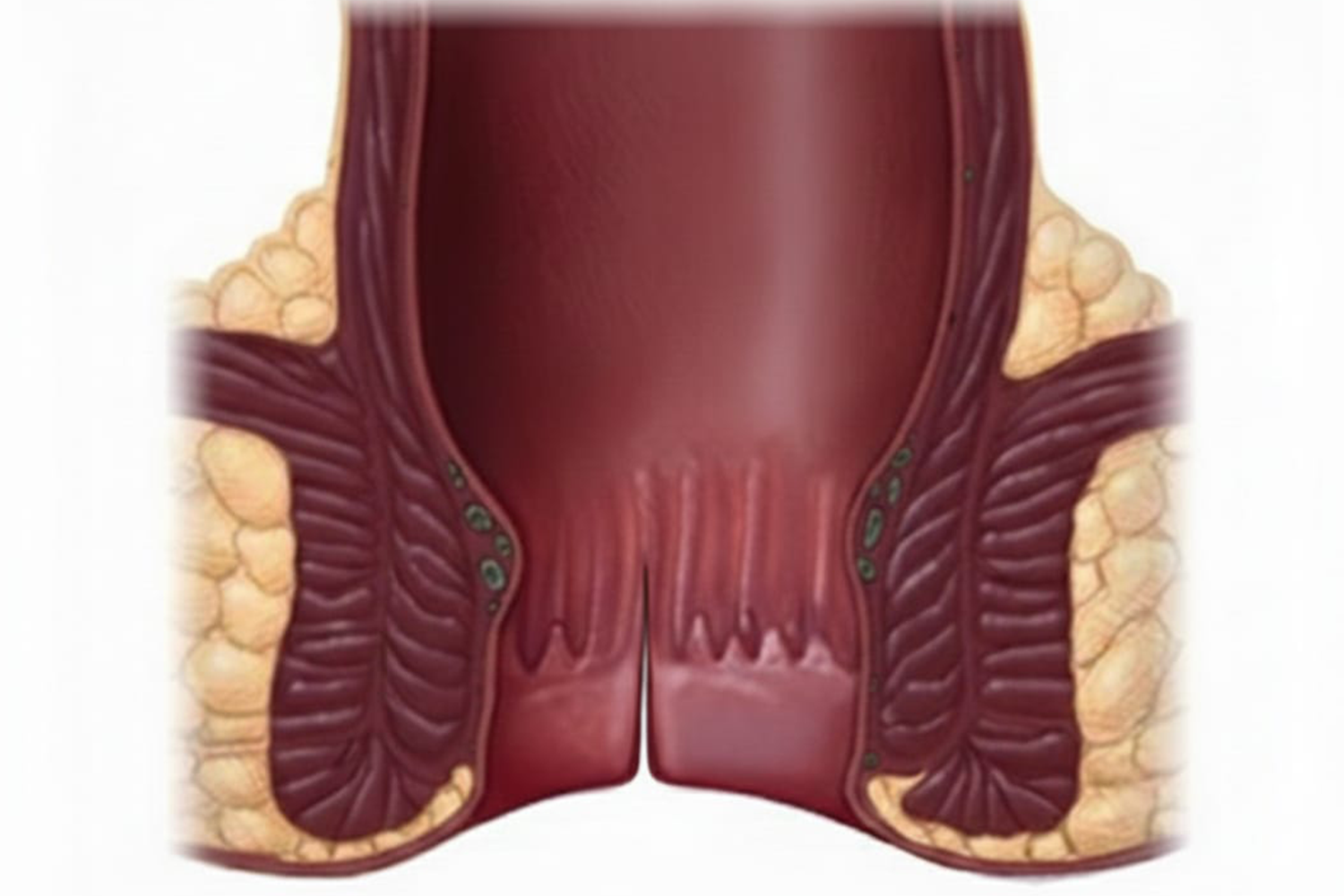
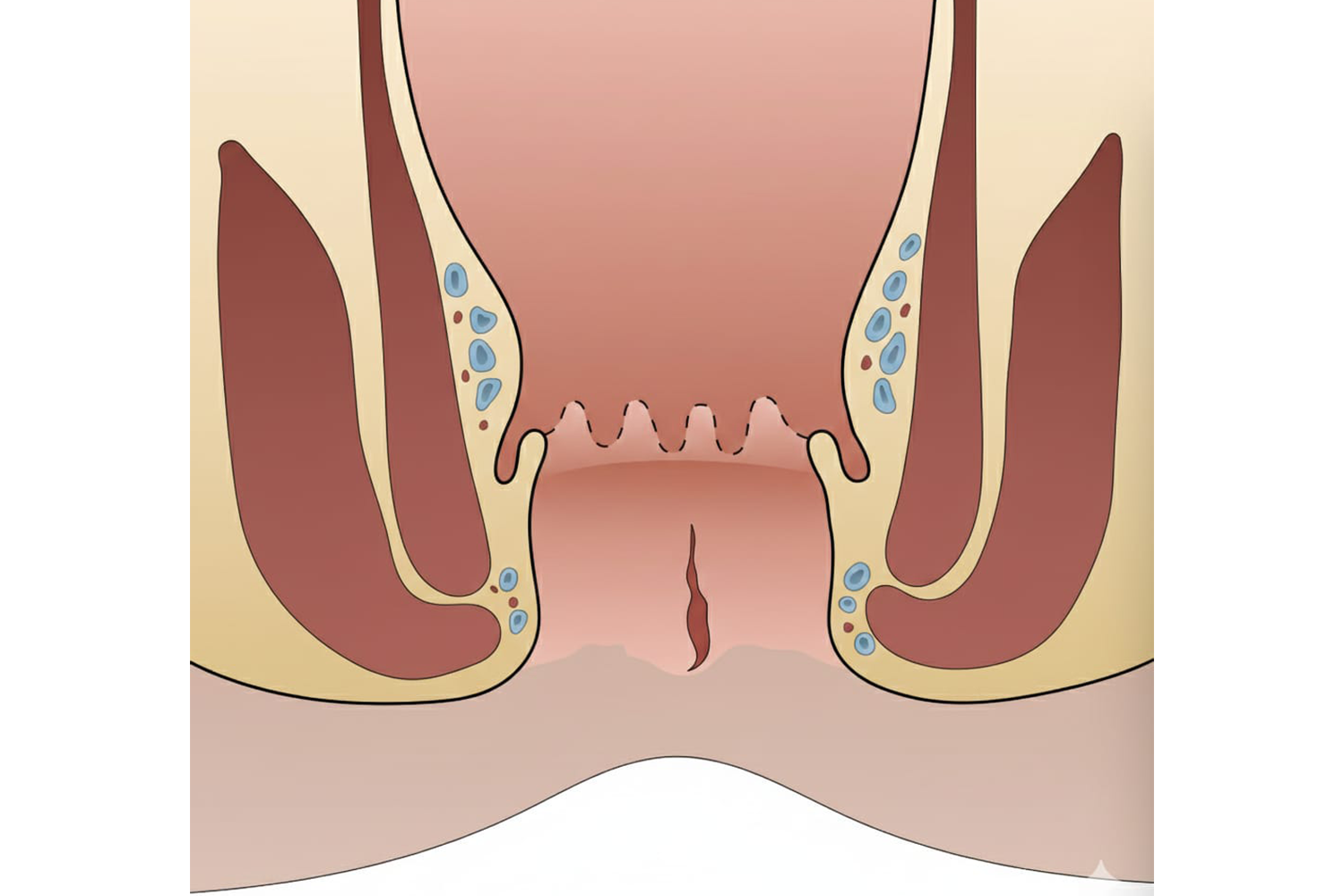
An anal fissure is a small, linear tear or crack in the moist, thin tissue (mucosa) that lines the anus. More specifically, it occurs at the junction of skin and mucous membrana of anal orifice.
Pathogenesis: The Vicious Cycle
How does a tiny tear cause so much trouble? It follows a specific pathological path:
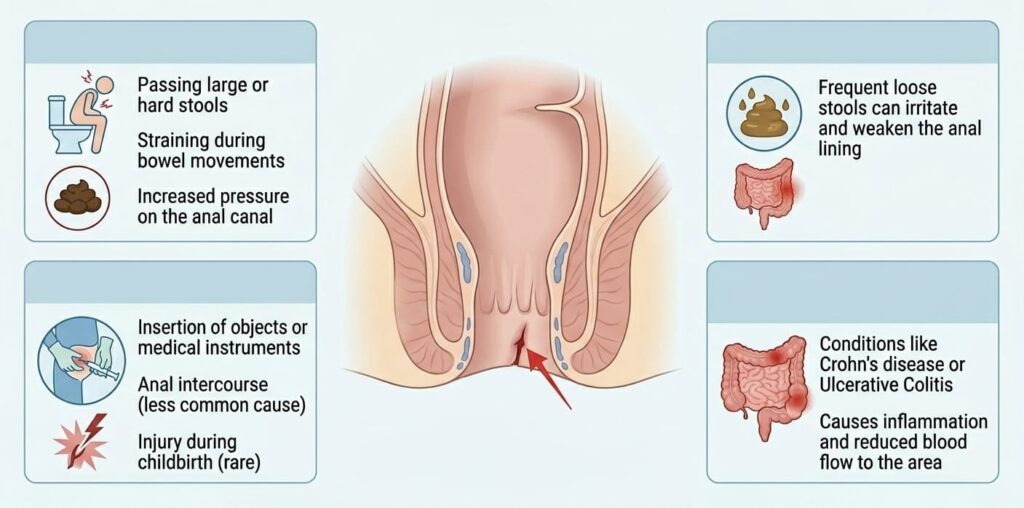
The Trigger: Most commonly, a hard stool or chronic diarrhea causes an initial tear in the anoderm.
The Spasm: The exposed internal anal sphincter muscle goes into a painful spasm to protect the area.
Reduced Blood Flow: This spasm compresses local blood vessels, reducing blood supply (ischemia) to the wound.
Non-Healing: Without adequate blood flow, the fissure cannot heal naturally, leading to a chronic, painful ulcer.
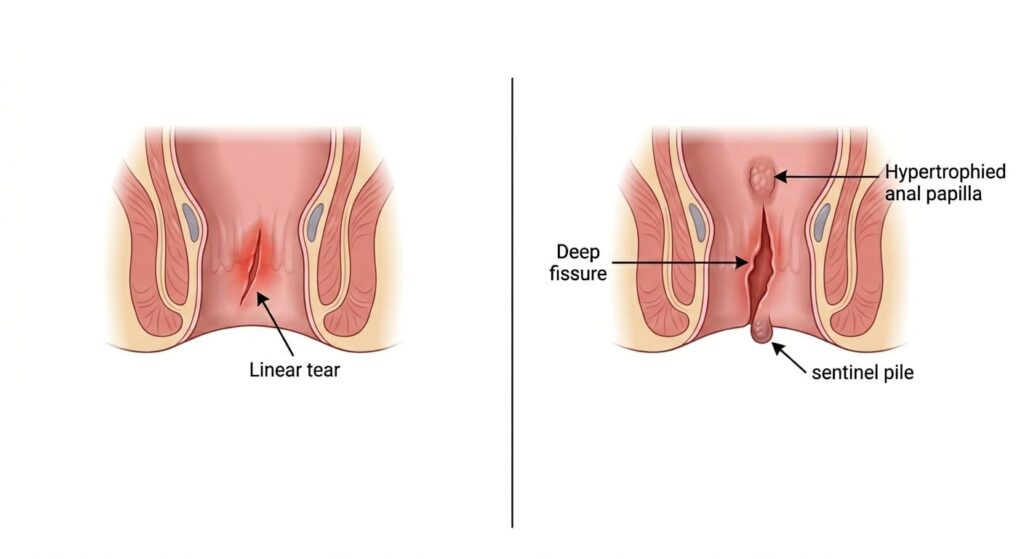
Acute Fissure: Less than 6 weeks. Looks like a fresh tear; usually heals with conservative medical management.
Chronic Fissure: More than 6 weeks. Deep tear often accompanied by a “sentinel pile” (skin tag) or hypertrophied papilla. Requires surgical intervention.
At Proctosafe Clinic, diagnosis is primarily clinical. Our experts perform a gentle visual inspection. In most cases, a digital rectal exam (DRE) is avoided in the acute phase to prevent unnecessary pain. For chronic cases, we may use a Proctoscope to assess the depth and state of the internal sphincter. In doubtful conditions, colonoscopy is done.
The Proctosafe Clinic Advantage: Ayurvedic Speciality
Led by our specialist Ayurvedic Surgeon, we provide tailored medical and surgical solutions. For early-stage cases, we utilize safe and potent Ayurvedic formulations that facilitate complete recovery within a short timeframe. For chronic fissures accompanied by sentinel tags, our surgeon performs minimally invasive procedures designed for lasting relief and a rapid return to daily life.