
Redefining Surgery: The Science of Ksharasutra
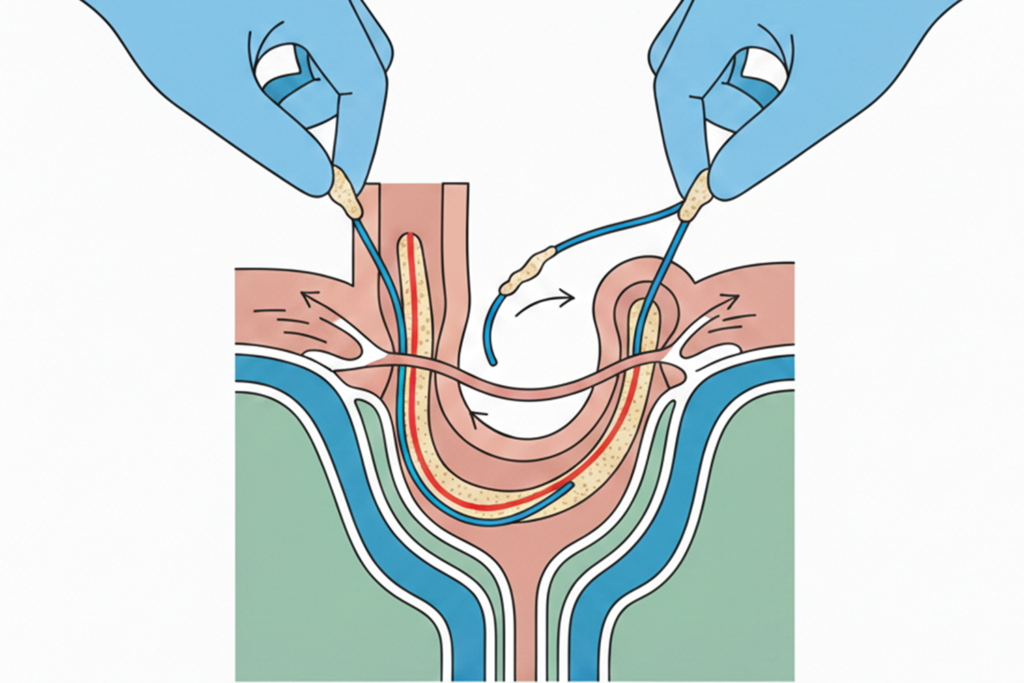
Ksharasutra is a surgical thread used in Ayurvedic surgery. This specialized, medicated intervention offers a clinically proven, minimally invasive alternative for managing chronic and complex anorectal conditions that frequently prove refractory to conventional surgical methods. Functioning as a pharmacologically active surgical tool, it facilitates simultaneous tissue debridement and accelerated wound healing.
What is Ksharasutra?
The term is derived from two Sanskrit words:
- Kshara: Refers to a corrosive, caustic, or alkaline substance.
- Sutra: Means a thread or string.
In essence, it is a medicated alkaline thread prepared by coating a surgical-grade thread with specific herbal and herbo-mineral pastes.
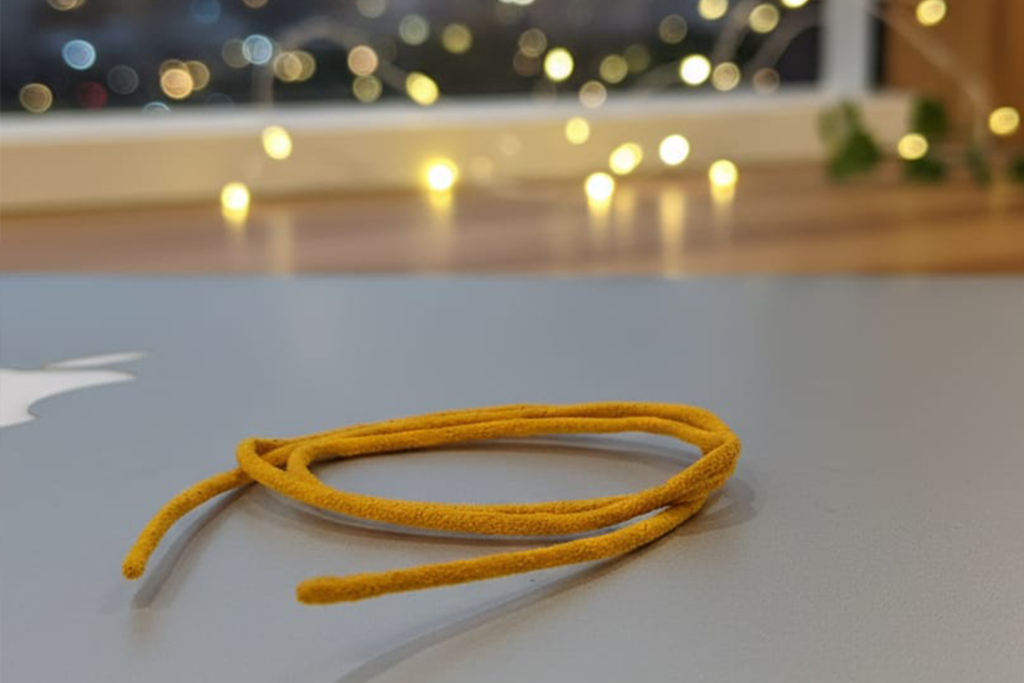

Literature & Historical Foundations
The wisdom of Ksharasutra isn’t new; it’s rooted in thousands of years of clinical success. It was first detailed by Maharshi Sushrut (the Father of Surgery) in the Sushrut Samhita for the management of piles and sinus.
Its efficacy is further documented in several classical Ayurvedic treatises, including:
- Charaka Samhita & Ashtanga Hridaya
- Chakradatta & Bhavaprakash Samhita
- Bhaishajya Ratnavali
- Rasatarangini & Rasakamadhenu
In modern times, this therapy was re-established by the Banaras Hindu University (BHU) and validated by premier scientific bodies like the ICMR (Indian Council of Medical Research) and CCRAS (Central Council for Research in Ayurvedic Sciences).
The Preparation: How Is It Prepared
Creating a potent Ksharasutra is a meticulous pharmacological process. It involves repeatedly coating a thread (traditionally linen) with medicinal layers:
Primary Ingredients:
- Snuhi Ksheera: The latex of Euphorbia neriifolia.
- Apamarga Kshara: The alkaline ash of Achyranthes aspera.
- Haridra: The powder of Curcuma longa (Turmeric).
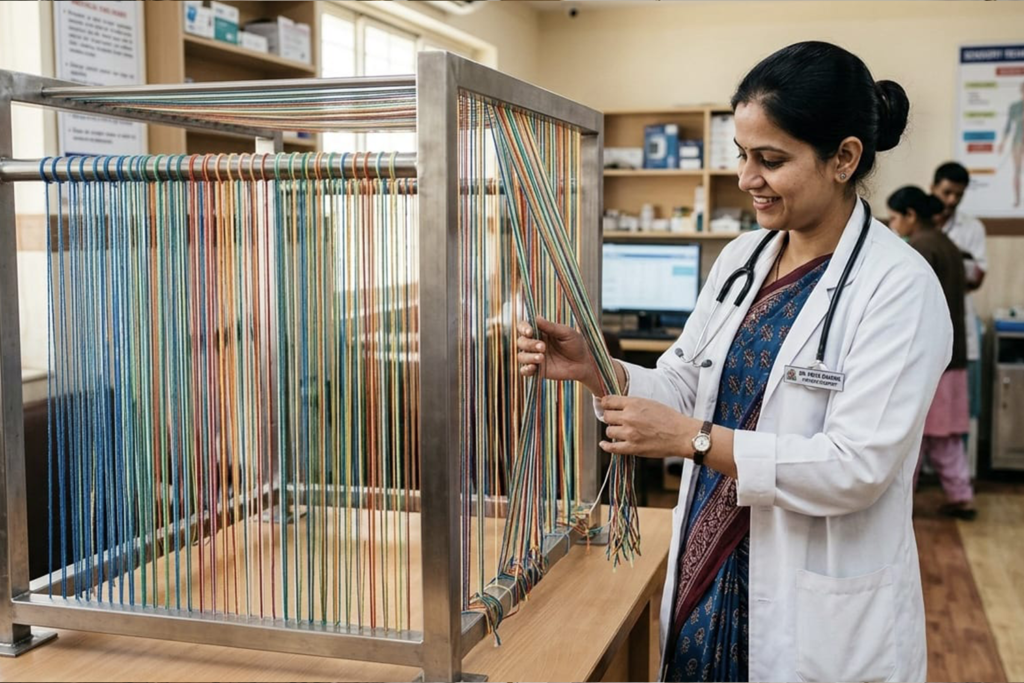
Various Types of Ksharasutra
Depending on the patient’s sensitivity and the nature of the disease, practitioners use different variants:
- Apamarga Ksharasutra: The standard and most widely used (Achyranthes aspera).
- Guggulu Ksharasutra: Uses Guggulu as a base for patients sensitive to Snuhi latex.
- Udumbara/Ashwatha Ksharasutra: Milder versions used for pediatric or sensitive cases.
- Papaya Latex Sutra: A modern variation utilizing the proteolytic enzymes of papaya.

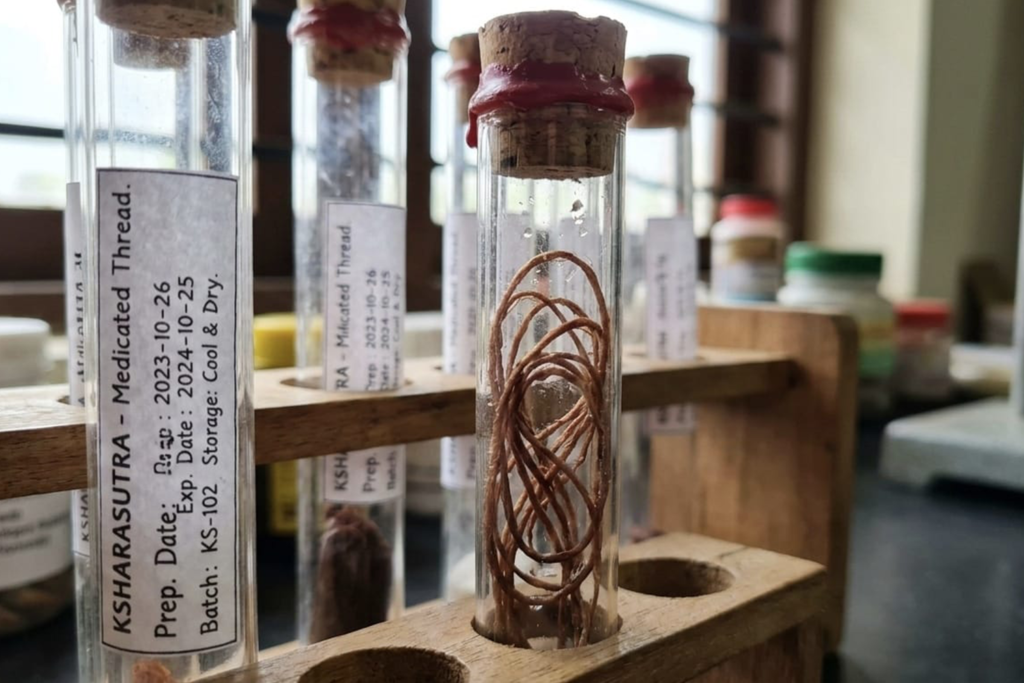
Storage & Preservation:
- The threads are dried and exposed to Ultra-Violet (UV) rays in a specially designed cabinet to ensure sterility.
- Once prepared, they are kept in air-tight containers and maintain their potency for six months.
Chemical Nature: Why It Works
The effectiveness of Ksharasutra lies in its unique chemical profile. It is highly alkaline, typically maintaining a pH value between 9.5 and 10.5.
- Proteolytic Action: The enzymes in the latex of Euphorbia dissolve the unhealthy granulation tissue.
- Saponification: The alkaline nature reacts with the fats in the tissue, essentially “melting away” the debris.
- Microbicidal: Most bacteria cannot survive in the high-pH environment created by the thread.

Clinical Applications: What Does It Treat?
Ksharasutra is widely recognized for its high success rate and low recurrence in treating:
- Anal Fistula (Fistula-in-ano)
- Haemorrhoids (Piles)
- Pilonidal Sinus
- Rectal & Anal Polyps
- Warts
How It Works: The Mechanism of Healing
Ksharasutra doesn’t just cut; it performs multiple surgical actions simultaneously. Its alkaline nature and herbal properties work through:
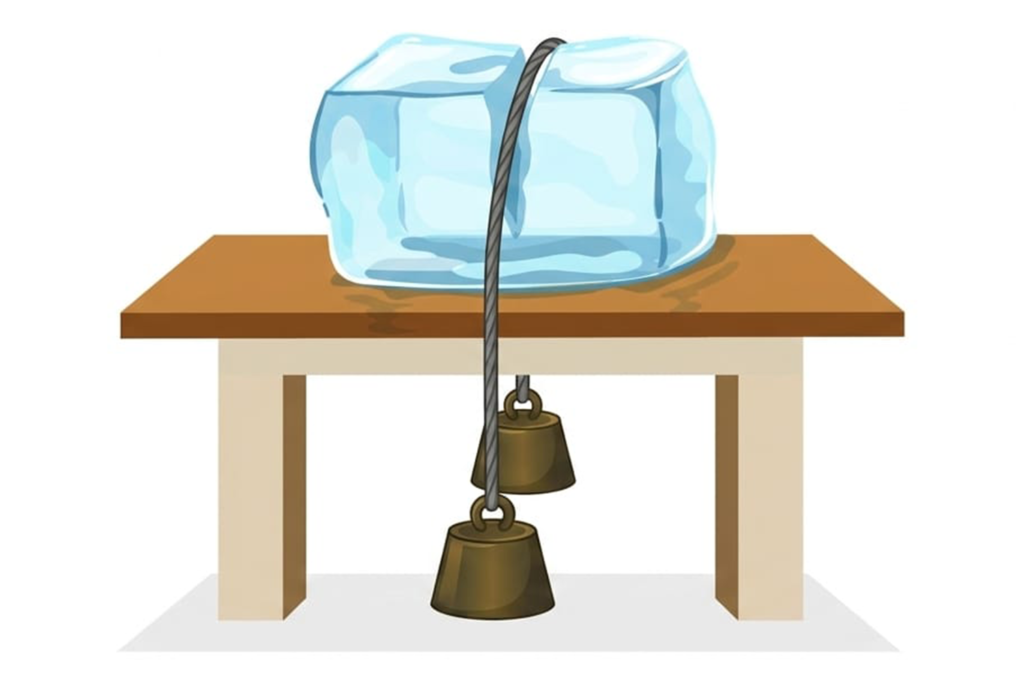
- Mechanical Action: It cuts through the tissues and lays the tract open.
- Chemical Cauterization: It destroys and removes unhealthy granulation tissue.
- Debridement: It facilitates the separation of debris and cleans the wound.
- Microbicidal Action: It controls local infection and prevents bacterial growth.
- Drainage: It allows for the constant drainage of pus and waste, promoting faster healing.
Procedure Breakdown
- For Anal Fistula (Fistula-in-ano)
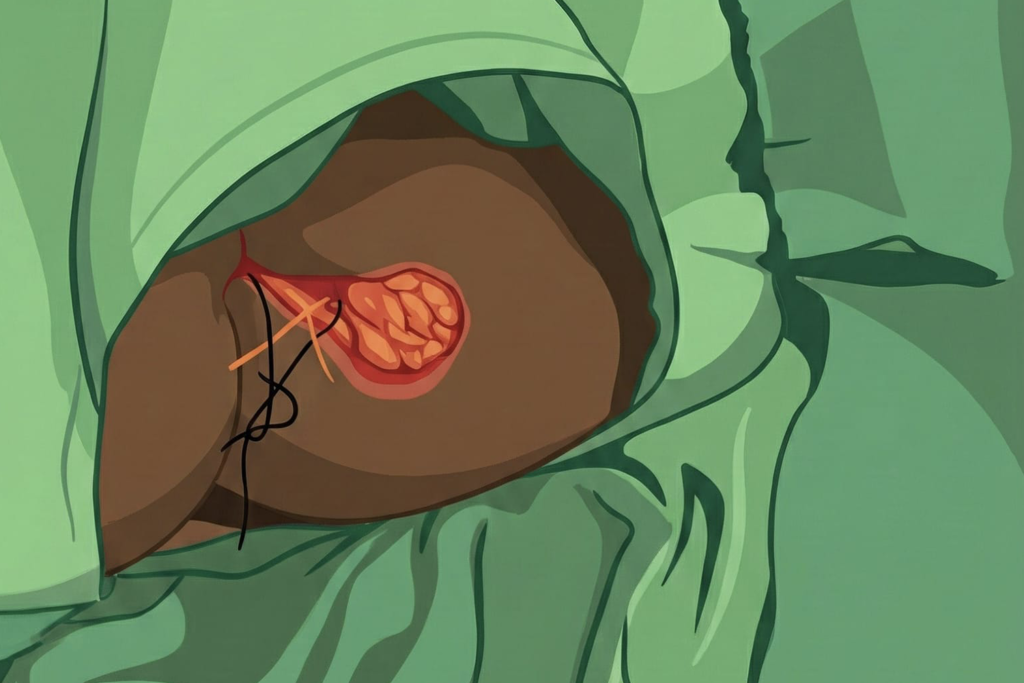
Under suitable anesthesia, a malleable probe is passed through the fistula’s external opening to the internal opening. The Ksharasutra is then threaded through the tract and tied.
- The Follow-up: The thread is replaced weekly. It gradually cuts and heals the tract simultaneously until the entire fistulous track is resolved.
- For Haemorrhoids (Piles)
The pile mass is held and brought out of the anal orifice. After a precise incision at the mucocutaneous junction, the mass is transfixed at the base with the Ksharasutra.
- The Result: This causes mechanical strangulation and chemical necrosis. The mass sloughs off naturally within 5–7 days, and the wound typically heals in 10–15 days.
- For Pilonidal Sinus
Similar to the fistula treatment, a probe carries the Ksharasutra through the sinus tract. This allows the medication to reach the deep-seated “nest of hair” and debris, cleaning the sinus from the inside out while cutting through the skin surface for permanent closure.