Haemorrhoids Treatment in Kolkata (Piles)
Haemorrhoids, commonly known as piles, are a widespread condition affecting many adults today. For those seeking haemorrhoids treatment in Kolkata, understanding the problem is the first step toward lasting relief and recovery.
What Exactly are Haemorrhoids?
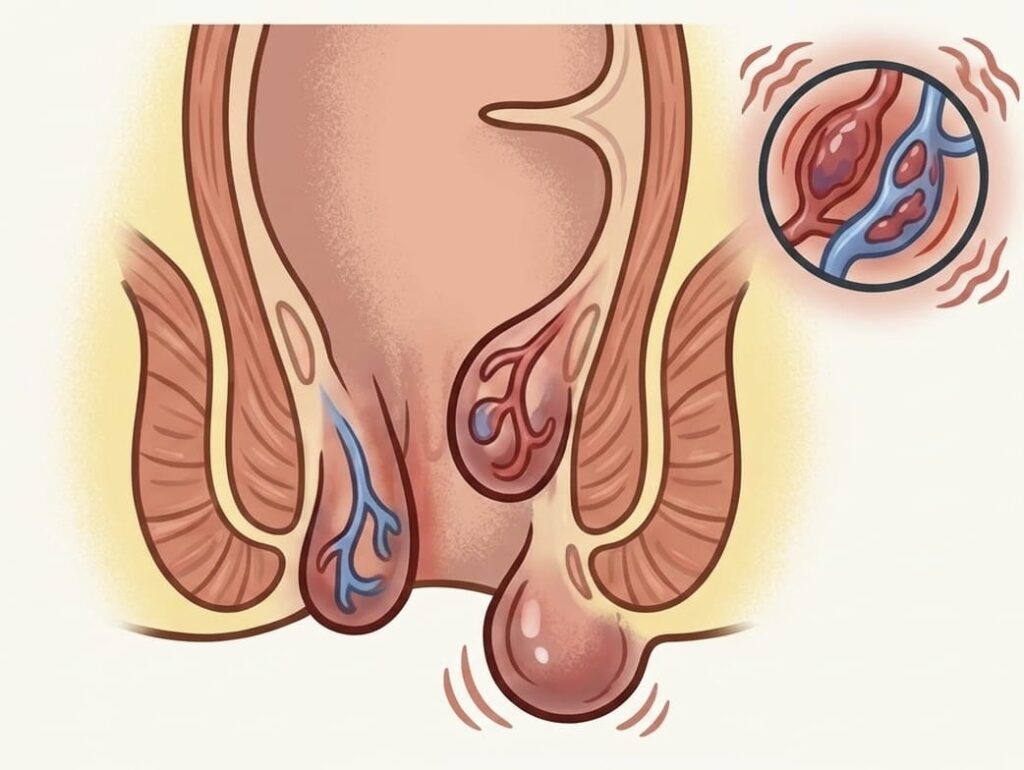
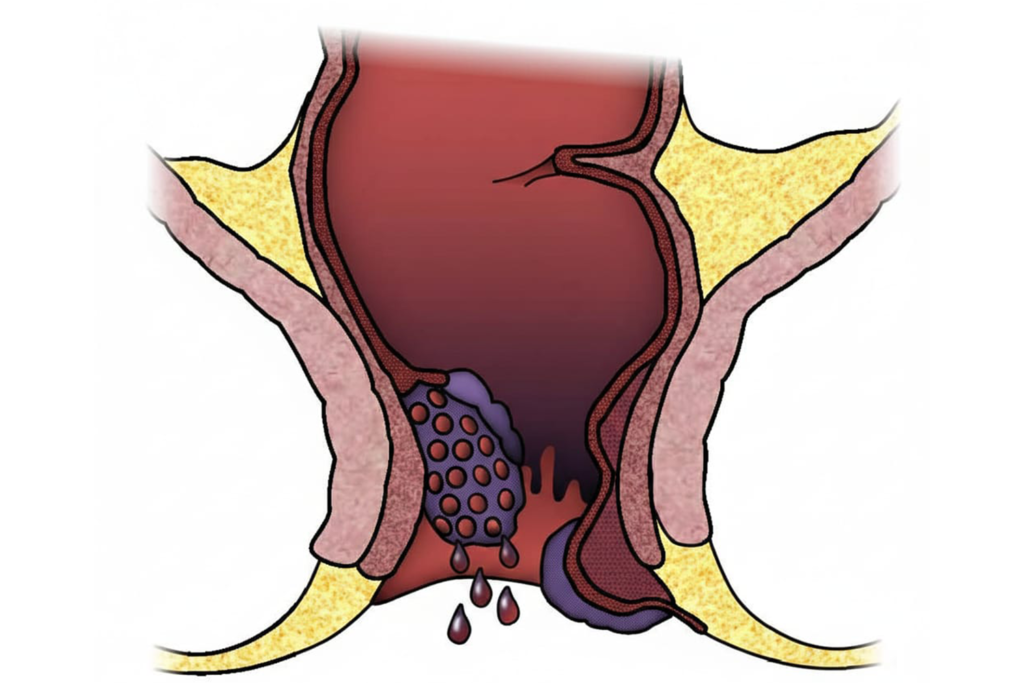
Haemorrhoids are not just “veins gone wrong.” They are actually normal vascular cushions—clusters of blood vessels, smooth muscle, and connective tissue—located in the anal canal. We all have them; they help with stool control. The “disease” occurs when these cushions become swollen, inflamed, or displaced.
Pathogenesis: Why Do They Occur?
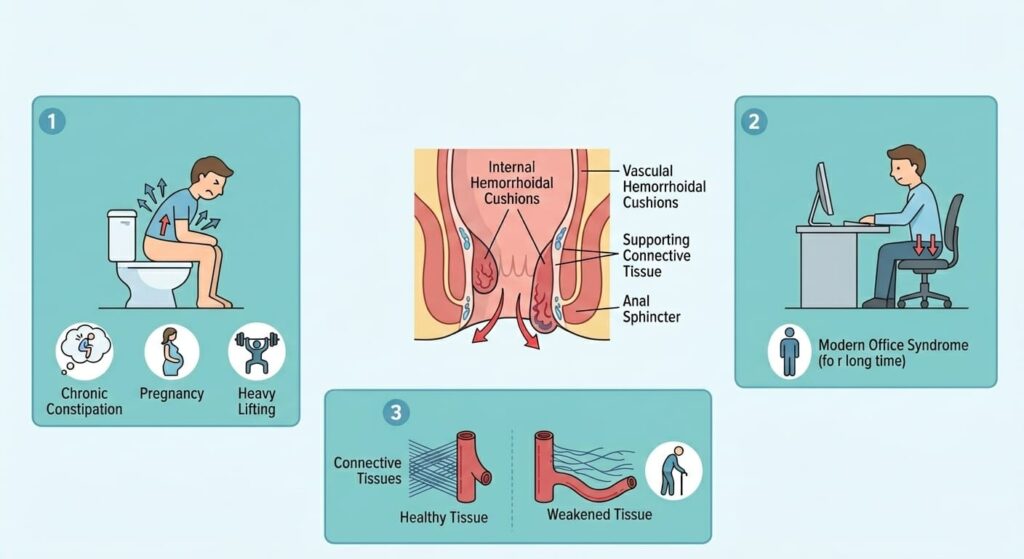
The development of haemorrhoidal disease is often attributed to the “Sliding Anal Canal Lining” theory. Several factors lead to the breakdown of the supporting tissues:
- Increased Intra-abdominal Pressure: Chronic constipation, straining during bowel movements, pregnancy, or heavy lifting.
- Vascular Congestion: Prolonged sitting (the “modern office” syndrome) or standing leads to blood pooling in the pelvic region.
- Tissue Degeneration: With age, the connective tissues that hold these cushions in place weaken, allowing them to slide down and protrude.
Classification and Types
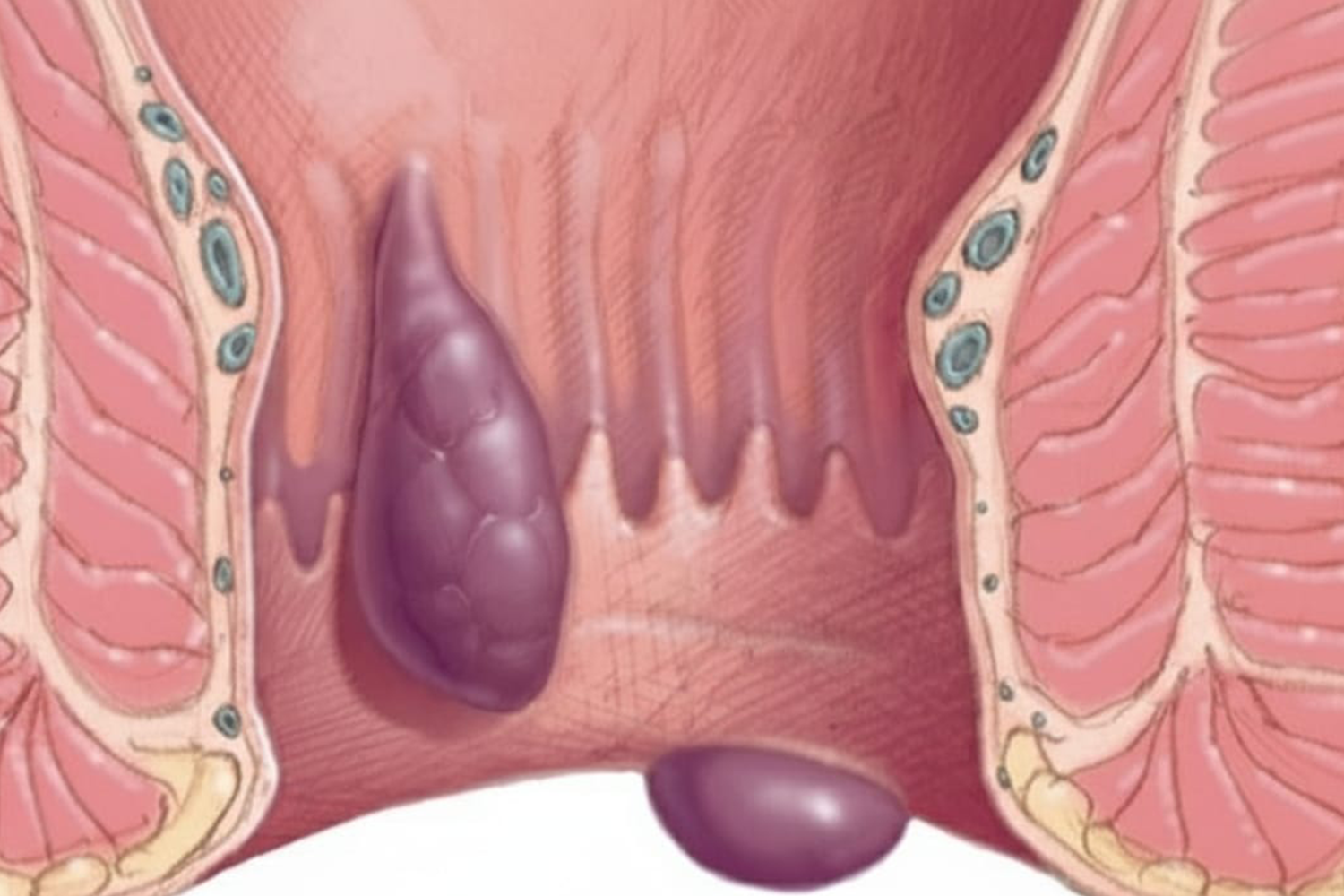
Haemorrhoids are primarily categorized based on their location relative to the dentate line (a dividing line in the anal canal).
|
Type
|
Location
|
Key Characteristics
|
|---|---|---|
|
Internal
|
Above the dentate line
|
Usually painless; characterized by bright red bleeding.
|
|
External
|
Below the dentate line
|
Covered by sensitive skin; can be very painful if thrombosed (clotted).
|
|
Interno-External
|
Spanning both areas
|
A combination of both types, often seen in advanced stages.
|
Internal Haemorrhoids are further graded by severity:
- Grade I: Bleeding but no prolapse.
- Grade II: Prolapse during straining but reduces spontaneously.
- Grade III: Prolapse that requires manual reduction (pushing back in).
- Grade IV: Permanently prolapsed and cannot be reduced.
Clinical Features: What to Look For
Symptoms can vary, but most patients at Proctosafe Clinic report:
- Painless Bleeding: Bright red blood noticed on the tissue or in the bowl.
- Protrusion: A feeling of a lump “coming down” during bowel movements.
- Pruritus (Itching): Irritation of the perianal skin due to mucus discharge.
- Discomfort or Pain: Typically associated with external or thrombosed piles.
Clinical Diagnosis
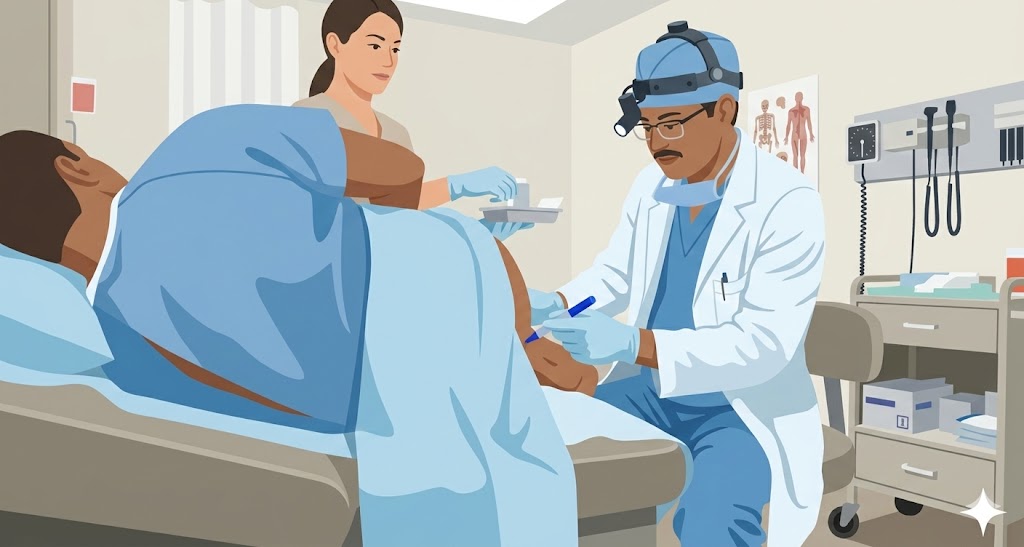
Getting a diagnosis is quicker and less scary than most people imagine. At Proctosafe Clinic, we use:
- Visual Inspection: To check for external piles, skin tags, or fissures.
- Digital Rectal Examination (DRE): A gentle manual check to assess muscle tone and find abnormalities.
- Proctoscopy: Using a small, lubricated instrument to look inside the anal canal for internal haemorrhoids.
- Colonoscopy: Sometimes the interior of rectum and colon is viewed for any additional findings.
Why Choose Proctosafe Clinic?
The Speciality Ayurvedic Care for Anorectal Diseases.
At Proctosafe Clinic, we believe that surgery isn’t always the only answer, and “quick fixes” often lead to recurrences. We specialize in Ayurvedic Anorectal Surgery, blending ancient wisdom with modern diagnostic precision.
- A Balanced Approach to Care: Healing doesn’t always require a blade. For Grade I and II conditions, we offer robust medical management using potent Ayurvedic formulations and Ksharakarma. This specialized sclerotherapy allows us to treat the root cause effectively at an early stage, ensuring a faster recovery and minimal downtime.
- Kshara Sutra Treatment: A gold-standard Ayurvedic surgical procedure. This medicated thread treatment is minimally invasive, requires minimum hospitalization, and has a significantly lower recurrence rate compared to conventional surgery.
- Holistic Healing: We don’t just treat the pile; we treat the gut. Our protocols include personalized dietary modifications and ayurvedic treatment to ensure your digestion is optimized.
- Expert Care: Our clinic is dedicated specifically to anorectal diseases, ensuring you receive care from specialists who see and solve these issues every single day.
Stop suffering in silence. Haemorrhoids are a medical condition, not a social taboo. At Proctosafe Clinic, we provide a discreet, professional, and highly effective path back to comfort.